Why Generic Agencies Cannot Help You Boost Search and Revenue
Generic marketing agencies know title tags and how to write reports. But this isn't enough for modern ecommerce. Stores can have millions of filters and seasonal items. When handled poorly, these issues waste Google’s crawl budget on pages that do not convert. Your best pages might get less crawling. Meanwhile, competitors capture traffic you paid for.
To win in search and boost sales, you need a better model. This model connects merchandising, engineering, paid media, analytics, content, and SEO. RankJockey starts with a review of templates, logs, redirects, and product data. Our technical SEO foundation shows which pages should be indexed and which need updates or removal.
Generic agencies miss buyer intent. They focus on broad terms. Real buyers search for specific details about features, brands, sizes, and availability. RankJockey’s keyword research services focus on these terms based on profit margins and inventory.
The cost of a bad partner is high. It wastes time and increases your costs. RankJockey helps teams succeed in search. We turn tech fixes into a clear plan. Each suggestion has an owner, impact, and measurable revenue goal.
Common Ecommerce Pitfalls
- Filters create many URLs that compete with key category pages.
- Generic product descriptions make items look the same.
- Navigation hides important items.
- Slow templates hurt conversion rates.
The RankJockey Framework to Boost Search and Market Share
RankJockey sees ecommerce SEO as a revenue system, not just tasks. Our goal is clear: drive search and increase profitable sessions. We start with insights from your business. This includes reviewing margins, product availability, customer queries, and competitors. We create a practical model instead of just a keyword list.
The first phase stabilizes performance. We use crawl data and log file analysis to see how search engines interact with your site. This helps find wasted pages, errors, and links that waste crawl resources. Teams get prioritized tasks to protect revenue and reduce risks.
The second phase structures your setup to match shopping habits. Parent categories build authority. Subcategories and product pages capture specific needs. Guides build trust and lead to sales. This structure improves search and boosts market share by showing Google clear links between pages and buyer needs.
The third phase boosts relevance and authority. We add scalable content, improve metadata, and apply structured data after we build a strong base. Our authority program earns signals that help your site compete better. This creates lasting visibility even when paid ads stop.
| Framework Phase | Expected Outcome |
|---|---|
| Technical stabilization | Better crawling and fewer lost rankings |
| Taxonomy and intent mapping | More visibility for high-demand categories |
| Content execution | Improved relevance and discovery |
| Authority building | Better competition and revenue growth |
Shopify SEO for Boosting Visibility and Sales
Shopify makes ecommerce easier, but its default settings can limit growth. Product URLs may come from collections, causing duplicate pages. To succeed, we must integrate SEO throughout the process.
Our Shopify SEO specialists check tags, collections, structured data, and templates. We ensure there's a clear preferred URL for each product. We also ensure that links do not split among several versions. Plus, we check generated code for good mobile performance.
High-growth brands need more than just product lists on collection pages. They need helpful text and links that guide buyers. We use meta tag optimization to boost relevance and click rates without misleading buyers.
Shopify Plus and global stores face unique challenges. Markets, currencies, and inventory need careful management. RankJockey helps teams handle this without affecting sales. Our goal is no downtime, better indexing, and an easy journey from finding items to purchase.
Your catalog may hold unseen revenue.
An audit exposes crawl issues, gaps, and missed chances. RankJockey turns these insights into actionable steps for your team.
Book Your Ecommerce Strategy CallWooCommerce SEO: Control Performance and Boost Revenue
WooCommerce offers great control, but too many options can be risky. Conflicting plugins and slow performance can harm your store. To succeed, we must prioritize speed and efficiency.
Our WordPress SEO services analyze theme performance, plugin actions, and loading paths. Our goal is quick load times, ideally under 140ms. We also find and fix issues that delay important content, especially for mobile users.
Structure is crucial. WooCommerce often has overlapping categories and uncontrolled tags. We create a clear structure for categories to rank for specific terms, reduce overlap, and improve search visibility. We also use smart links and breadcrumbs to strengthen this structure.
Schema must reflect your current inventory. Our Core Web Vitals optimization and structured data work together to ensure eligible products load quickly.
<link rel="canonical" href="https://example.com/product/primary-product-url/">
<meta name="robots" content="index,follow">
<script type="application/ld+json">{ "@type": "Product" }</script>
Faceted Navigation: Need to Control Indexing
Faceted navigation improves user experience but complicates SEO. Filters for color, size, and brand create many URL variations. If not managed, they can confuse search engines and weaken authority on important pages.
To enhance visibility, you need a clear indexing plan. Some filter combinations should be indexed, while others should be usable but hidden from search engines. RankJockey evaluates demand, inventory depth, and duplicate risks to make indexing recommendations.
Our plan must be clear. Blocking too many pages can hide valuable results. Allowing too many can create clutter. Our sitemap and robots optimization sets clear rules for how parameters behave.
The benefits are significant. A focused page can outperform a generic category page when it highlights valuable products. This way, brands boost visibility and sales without cluttering their catalogs.
- Does the combination show clear buyer demand?
- Can the page show enough in-stock products?
- Can it provide unique content that guides buyers?
- Will it compete with an existing page?
Product Schema and Merchant Center for Better Search Results
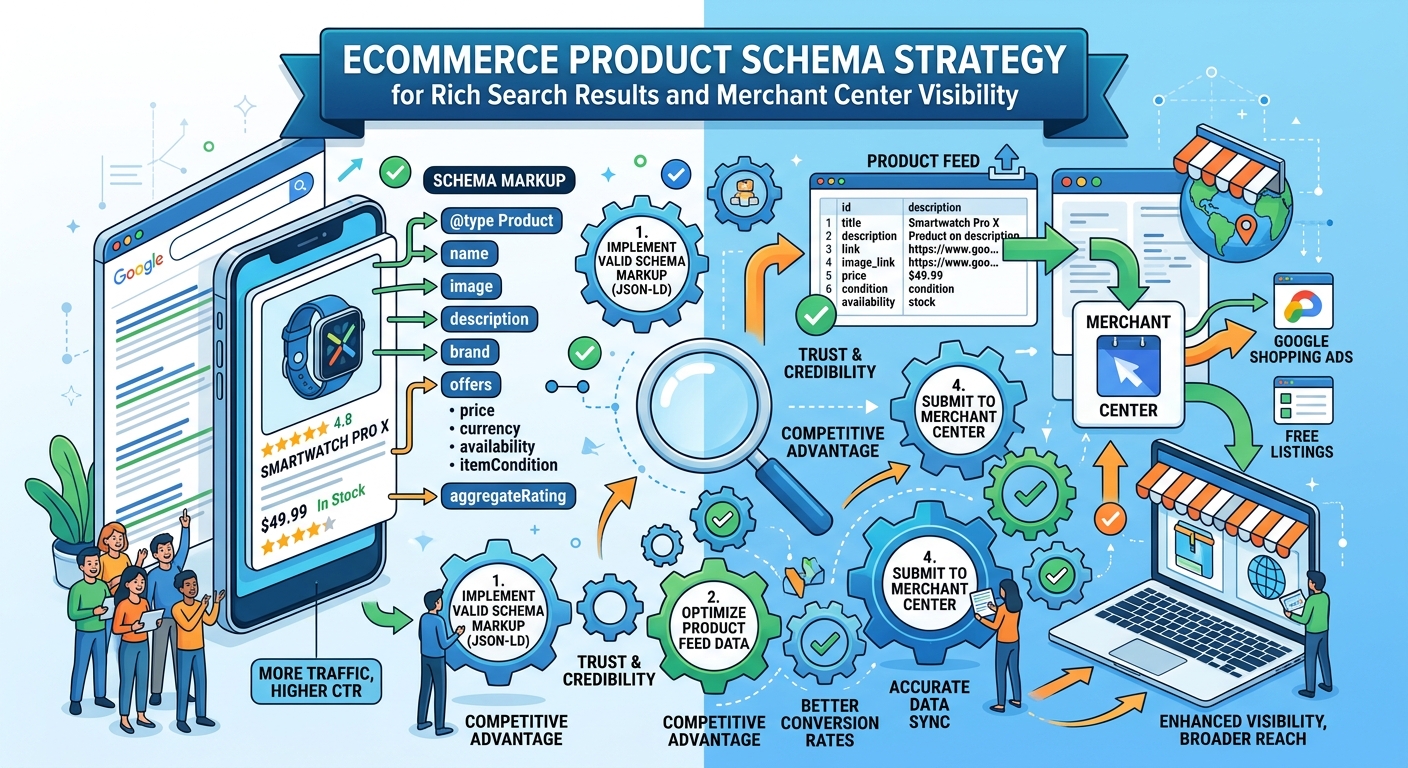
Shoppers often see prices, availability, and images before visiting your site. So, structured data is crucial. To improve search and increase clicks, product data must be accurate across all platforms. Weak markup can hurt chances for rich results.
RankJockey implements advanced schema markup that reflects accurate product states. We ensure identifiers, pricing, and details are correct to help Google understand your offers better.
Google Merchant Center is key. Product titles, categories, and attributes must match landing data. We ensure our feed quality aligns closely with organic queries for visibility.
Ecommerce leaders should treat schema and feeds like key systems. When something changes, the page and feed must reflect this. Our advanced SEO packages ensure technical validation links back to your business goals.
Category Content Strategy That Turns Demand into Revenue
Category pages are key for organic traffic in ecommerce. They capture buyers who are ready to choose but need guidance. To excel in search and increase income, each page needs a clear link between buyer intent, product options, text, filters, links, and design.
We start with competitor analysis to see which pages dominate keywords and how we can improve. Then we map intent, FAQs, and link opportunities to your pages. This gives buyers clear choices instead of stuffing pages with keywords.
A top category page should have clear text, solid navigation, product highlights, filters, and guidance for buyers. This allows brands to dominate search and boost conversions without creating walls of text.
Supporting content matters. Guides, comparisons, and help pages should link back to the main pages in a friendly way. Our content marketing strategy turns information into results and builds authority. RankJockey updates content regularly to keep it fresh.
Internal PageRank for Larger Ecommerce Stores
If search engines cannot find a product page, it won’t earn revenue. Large stores often hide key items deep in pagination or poor structures. To excel in search and boost sales, each key page must get internal links from important pages.
RankJockey measures link depth, volume, and relationships to find weak spots. Our scalable SEO infrastructure helps keep a strong linking system for large catalogs.
A good structure is not flat for its own sake. It should guide buyers easily to relevant products. Google needs to see clear paths from general topics to specific ones. This helps with long-tail search visibility.
Internal linking adds more value when paired with strong content. A guide can introduce a category and link to products, drawing users deeper into your inventory. For growth, our digital PR services and architecture improve the entire system.
Top Priorities for Large Catalogs
Protect crawl budgets, keep top products visible, connect content to sales pages, and remove dead links. These strategies ensure reliable growth.
Measuring and Governing Ecommerce SEO Growth
To boost search and revenue, leaders need clear reports linking SEO to business results. Rankings alone are not enough. CMOs need insights into organic revenue, category performance, and cost per acquisition. CTOs need to focus on technical priorities and risks. Heads of Growth need reliable forecasts.
RankJockey creates reports that meet these needs. We separate brand and non-brand demand, look at landing page types, monitor index coverage, and highlight templates with potential. Our SEO audit package gives you a solid starting point.
Governance is vital because ecommerce sites change quickly. New products, updates, and changes happen all the time. A simple SEO checklist catches mistakes before they cost you. This helps you succeed in search and keep growing.
The final rule is accountability. SEO must work closely with merchandising and engineering. RankJockey provides a clear action list and solid reasons. This leads to reliable execution and stronger organic market share.
With vs. Without Specialized Ecommerce SEO
| Feature | Without Expert SEO | With RankJockey |
|---|---|---|
| Crawl budget | Wasted on duplicate pages | Focused on valuable products |
| Category pages | Thin content with unclear focus | Built for conversion |
| Product schema | Poor or fuzzy data | Strong markup for rich results |
| Site performance | Slow pages and poor experience | Focused on quick load times |
| Internal linking | Poorly connected products | Pathways that aid discovery |
| Keyword focus | High volume, low value terms | Targeted, high-margin demand |
| Reporting | Rank spots without context | Links between search and revenue |
Common Ecommerce SEO Questions
Stop Letting Competitors Capture Your Key Search Results
Waiting on tech fixes makes key products harder to find. Build a strong SEO system that boosts market share and reduces costs over time.