

Let's picture a scenario that might feel uncomfortably familiar. You run an online store. You sell a fantastic product. You have invested heavily in beautiful product photography, a seamless checkout experience, and a beautifully designed Shopify or Magento storefront.
When people actually find your website, they buy. Your conversion rate is fantastic.
The problem? Nobody is finding the website unless you pay Mark Zuckerberg or Google Ads for every single click.
If your entire business model is reliant on paid advertising, you don't actually own a business; you are just renting space on someone else's platform. The moment ad costs spike - which they inevitably do - your profit margins vanish overnight.
To build a resilient, highly profitable online retail brand, you have to break the addiction to paid ads. You need to capture organic demand. But e-commerce search engine optimization is an entirely different beast compared to optimizing a local service business or a software company. It is messy, it is fiercely competitive, and if handled incorrectly by an amateur agency, it can result in thousands of your product pages getting completely ignored by Google.
That is where specialized E-Commerce SEO Services come into play.
The team here at Rank Jockey has spent years tearing apart the algorithms that dictate who wins and who loses in the digital retail space. Today, we are going to walk through the exact mechanics of how we approach e-commerce SEO. We’ll skip the generic advice you’ve heard a hundred times and focus on the deep, structural strategies that actually move the needle on your monthly revenue.
The Category Page: Your Digital Storefront
When most store owners think about e-commerce SEO, their minds immediately jump to their product pages. They obsess over whether the description for their "Blue Running Shoe, Size 10" has enough keywords in it.
Here is the harsh reality: Unless you are selling a highly proprietary, one-of-a-kind invention, your individual product pages are almost never going to drive the bulk of your organic traffic.
Why? Because consumers rarely search for highly specific product variants when they are at the top or middle of the buying funnel. They don't search for "Nike Air Zoom Pegasus 39 Blue Size 10." They search for "best men's running shoes" or "blue running shoes for flat feet."
These are category-level searches. If you want to drive serious volume, you have to realize that your Category Pages are the most valuable real estate on your entire website. They act as the broad digital storefronts that catch shoppers while they are still browsing options.
Transforming Categories from Grids to Destinations
Take a hard look at your current category pages. If they are just a grid of product images with a generic title at the top, you are failing the SEO test. Google looks at that page and sees a list of links, devoid of context, authority, or helpful information.
To dominate search results, we have to transform your category pages from simple product grids into comprehensive "destination hubs."
How do we do that? We add value.
We write comprehensive, engaging copy for the category that doesn't just stuff keywords, but actually helps the buyer make a decision. We include buying guides directly on the page. We answer frequently asked questions about the category (e.g., "How to choose the right running shoe for your arch type"). We implement internal links to sub-categories, creating a perfectly organized hierarchy.
By enriching the category page, we signal to Google that your site isn't just a catalog - it is the definitive resource for anyone looking to buy that specific type of product.
The Duplicate Content Crisis in E-Commerce
If there is one technical nightmare that plagues almost every online retailer, it is duplicate content. And the worst part? Most store owners have no idea it’s happening.
Google hates duplicate content. When it sees five different URLs pointing to the exact same text, it gets confused. It doesn't know which one to rank, so it often chooses to rank none of them. In the e-commerce world, this happens all the time without you lifting a finger.
The Manufacturer Description Trap
Are you selling products manufactured by another company? If so, did you copy and paste the manufacturer’s product description directly onto your site?
If you did, you share that exact same text with Amazon, Walmart, Target, and the five hundred other retailers selling that exact same item. Google will never rank your site above Amazon if your content is identical. You must rewrite your product descriptions. It is a painstaking process, but injecting your own brand voice, unique features, and specific benefits is non-negotiable for organic visibility.
The URL Parameter Nightmare
The second cause of duplicate content is far more insidious because it happens automatically.
Think about how users interact with your store. They land on a category page for "T-Shirts." Then, they use a filter on the sidebar to sort by "Red." Then they sort by "Price: Low to High."
Every time they click a filter, your e-commerce platform generates a new, dynamic URL (e.g., www.yourstore.com/tshirts?color=red&sort=price_asc).
The problem? To Google, that dynamic URL looks like a brand new page. But the content on the page - the grid of red shirts - is essentially the same as the main T-shirt category page. If you have ten filters, you could accidentally generate tens of thousands of duplicate URLs, completely paralyzing Google’s crawlers.
Fixing this requires deep technical surgery. We dive into your site architecture and implement strict canonical tags. A canonical tag is a hidden piece of code that essentially tells Google, "Hey, I know this URL looks different, but it’s really just a copy of my main category page. Please ignore this one and only rank the main page."
By pruning these dynamic URLs out of Google’s index, we consolidate all of your ranking power into the pages that actually matter.
The Psychology of Search Intent
Not all traffic is created equal. A thousand visitors looking for information are worth less than ten visitors looking to buy right now.
To maximize the ROI of an SEO campaign, we have to deeply analyze "Search Intent." What is the user actually trying to accomplish when they type a phrase into Google? We break this down into three main categories, and we map your website architecture to match them perfectly.
1. Informational Intent (Top of Funnel)
The user has a problem, but they don't know what the solution is yet.
- The Search: "How to get red wine out of a white carpet."
- The Strategy: We do not send this person to a product page for carpet cleaner. They aren't ready to buy yet; they just want advice. We capture them with a highly detailed, authoritative blog post that solves their problem. Within that blog post, we naturally mention and link to your proprietary carpet cleaning solution. We have now introduced your brand as a trusted expert.
2. Commercial Investigation (Middle of Funnel)
The user knows what type of product they need, and they are comparing their options.
- The Search: "Best pet-safe carpet cleaners 2025."
- The Strategy: This user wants to see options. We capture them with your optimized Category Pages, or with long-form comparison articles (e.g., "Why Our Cleaner Beats Brand X"). We highlight reviews, social proof, and key differentiators.
3. Transactional Intent (Bottom of Funnel)
The user has their credit card in their hand. They know exactly what they want.
- The Search: "Buy [Your Brand] enzymatic carpet cleaner 32oz."
- The Strategy: This is where your Product Pages shine. The SEO here is about removing friction. We ensure the page loads instantly, the "Add to Cart" button is prominent, and the schema markup displays the price and stock availability directly in the search results so they click your link instead of a competitor's.
When an SEO strategy seamlessly guides a user through all three of these stages, you stop acting like a digital billboard and start acting like a digital salesperson.
Speaking the Machine's Language: Schema Markup
We’ve talked a lot about the human experience - writing engaging copy and solving problems. But to truly dominate e-commerce search, you have to cater to the machines.
When a user searches for a product on Google, you have likely noticed that some results just look better. They have bright orange star ratings right in the search results. They show the price in bold text. They say "In Stock" right below the link.
These are called "Rich Snippets," and they are absolute cheat codes for driving traffic. A search result with a star rating will steal clicks away from the #1 ranked result, even if it is sitting in the #3 position.
But Google doesn't magically figure out your review score or your pricing. You have to feed that data to the algorithm using a highly specific code language called Schema Markup (JSON-LD).
At Rank Jockey, we don't just install a basic plugin and hope for the best. We write dynamic, nested schema scripts that pull real-time data from your store's database and feed it directly into Google’s brain.
- Product Schema: We explicitly define the brand, the SKU, the price, the currency, and the condition of the item.
- AggregateRating Schema: We pull your verified customer reviews and format them so Google displays those beautiful orange stars in the SERPs.
- Offer Schema: We tell Google whether the item is in stock, out of stock, or on pre-order, preventing angry customers from clicking a link only to find the item is unavailable.
This technical execution bridges the gap between your beautiful storefront and the rigid algorithms of search engines, giving you a massive competitive advantage in crowded markets.
Building Authority: The Reality of E-Commerce Link Building
Let's address the elephant in the room: Link building for an e-commerce site is brutally difficult.
If you run an informational blog, other websites will gladly link to your articles as a resource. But if you run an online store, nobody wants to naturally link to your product pages. Other website owners know you are trying to sell something, and they are highly reluctant to give you a free backlink unless you pay them (which violates Google's guidelines) or offer them an affiliate commission.
So, how do you build the domain authority required to outrank massive retailers?
You do it through "Digital PR" and tangential content.
We don't pitch your product pages to journalists. Instead, we create highly linkable, data-driven assets that live on your blog or resource center, and we pitch those assets to the press.
For example, if you sell high-end camping gear, we might create a massive, data-backed study analyzing "The 50 Most Dangerous Hiking Trails in America." We pitch that study to outdoor magazines, national news outlets, and travel bloggers. Because it is a fascinating piece of data (and not a sales pitch), they link to it.
Those high-authority links pump massive amounts of "link juice" into your domain. We then use internal linking to funnel that newfound authority directly from the blog post into your money-making category and product pages.
It is a sophisticated, indirect approach to building authority, and it is the only safe, sustainable way to build a high-power backlink profile in the e-commerce space.
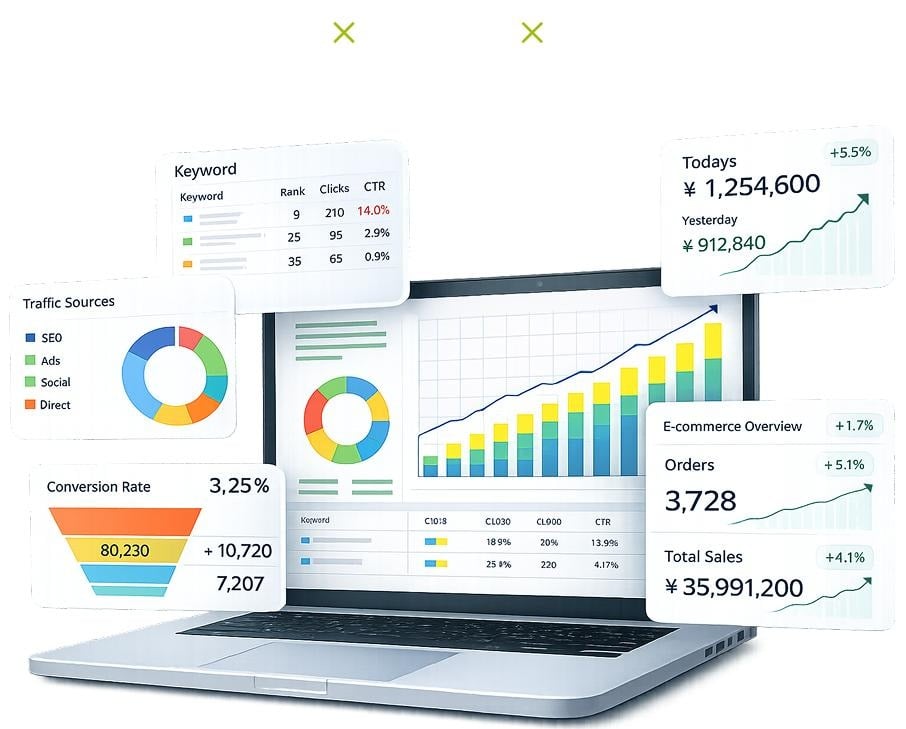
Stop Renting Your Traffic. Start Owning Your Market.
Running a successful e-commerce brand is stressful enough without having to worry about whether your Facebook Ad account is going to get randomly suspended, or whether a spike in CPC costs will destroy your profitability for the month.
Organic search is the only marketing channel that offers true digital equity. When you invest in a proper, structurally sound e-commerce SEO campaign, you are building an asset that compounds over time. A perfectly optimized category page that secures the top spot on Google will drive highly qualified, ready-to-buy traffic to your store for years, long after the initial work is completed.
But you cannot achieve that with generic tactics. You need a partner who understands the technical nuances of dynamic URLs, the psychology of search intent, and the engineering required to implement flawless schema markup.
If you are tired of relying on paid ads to keep your lights on, it is time to have a serious conversation about your organic potential. Reach out to our team at Rank Jockey today. Let’s pull the data, look at your competitors, and build a strategy that doesn't just increase your traffic, but fundamentally scales your revenue.